Sachsen

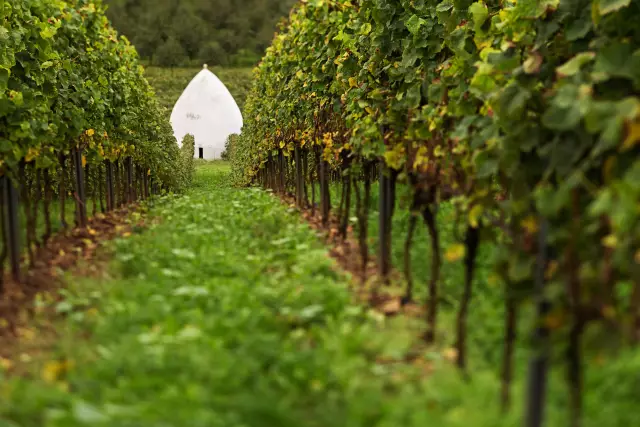
Sachsen (Saxony) is the easternmost and, at 531 hectares, one of the smallest wine-growing regions in Germany. The vineyards only begin near Dresden, at 51 degrees north latitude.
Facts
-
531 ha
Vineyard area (2025)
-
17
Single vinyards
-
800
Years of winemaking tradition
Winegrowing in this region has a tradition of more than 800 years. It was first documented in 1161 and reached its peak in the 17th century, when it covered an area of around 5,000 hectares.
The porcelain city of Meissen is considered the cradle of Saxon viticulture. To this day, the region’s largest wine festival is celebrated there. Over the centuries, both the church and secular authorities supported and promoted winegrowing. Castles, manor houses, pleasure palaces, vintners’ homes, vineyard chapels and wine taverns were built, shaping the characteristic interplay of architecture and viticulture that defines the region.
Despite its northeastern location, the area is able to produce top‑quality wines—particularly white wines - thanks to its favorable climate. Where rainfall is still sufficient, the continental climate with its 1,600 hours of sunshine creates ideal conditions for grape growth and ripening. The steady alternation between daytime warmth and cool nights enhances the development of aromas and bouquet in the wines.
Saxon wine is a rarity. It is found mainly within the growing region itself - in cozy wine taverns and local restaurants, stylish vinotheques, lively autumn wine festivals, and of course at the wineries. These are located along the Saxon Wine Route. The 55‑kilometer route runs from Pirna through Dresden, Radebeul and Meissen to the idyllic Elbe wine villages around Diesbar‑Seußlitz, linking cultural landmarks with a picturesque landscape shaped by vineyards.
The typical steep terraces supported by dry‑stone walls are a special treasure of Saxon viticulture. On the steep slopes along the Elbe, the region’s finest wines flourish, including Pinot Blanc, Pinot Gris and especially Traminer. The 90‑kilometer Saxon Wine Trail also connects the region’s highlights, leading visitors through beautiful vineyards, to scenic viewpoints and historic wine cellars.
Numerous seasonal wine taverns (Straußwirtschaften) invite guests to enjoy a glass of wine with hearty regional dishes. These rustic establishments, often run by small or part‑time winegrowers, are extremely popular. Those interested in learning more about vineyard work or cellar processes should consider a holiday at a winery or attend the “Open Winery Days” in Saxony: On the last weekend of August, more than 25 wineries open their doors for cellar tours, vineyard walks and tastings. Alongside Müller‑Thurgau, Riesling and Pinot Blanc, visitors can sample rarities from the roughly two dozen grape varieties cultivated in the Elbe Valley - such as Elbling, Gutedel, or Goldriesling, the latter grown exclusively in Saxony.
In Germany’s easternmost winegrowing region, the effects of climate change are becoming clearly noticeable. As in many southwestern regions, the late‑ripening Riesling has now become the most important grape variety and is cultivated on 75 hectares.
Around one fifth of Saxony’s vineyard area is planted with red varieties, with Pinot Noir covering 45 hectares - nearly half of the region’s red‑wine plantings. A regional specialty is Goldriesling: this rare variety is now grown almost exclusively in Saxony, covering 28 hectares.
Overview Sachsen
Geographical Location
Situated in the upper Elbe Valley along the 51st parallel, the region stretches for approximately 55 km (34 miles) to the north and south of Dresden. About 100 km (62 miles) further north lie a few additional vineyard parcels near Wittenberg, where Martin Luther posted his famous theses in 1517.
Major Towns
Dresden · Meissen · Radebeul
Climate
A continental climate characterized by warm, dry summers and cold winters.
Soil Types
The steepest slopes consist of weathered granite and gneiss, while some vineyard sites feature deposits of loess or sand.
Vineyard Area (2025)
531 ha · 2 districts · 4 collective vineyard sites · 17 individual vineyard sites
Grape Varieties (2025)
White 81%, Red 19%
Riesling · Müller‑Thurgau · Pinot Blanc · Pinot Gris · Pinot Noir
Marketing & Wine Estates
Most vineyards are cultivated by part‑time growers who deliver their grapes to the regional cooperative cellars in Meissen. A small number of private estates produce and market their own wines. The state‑owned cellars at historic Schloss Wackerbarth (founded in 1730) in Radebeul and the region’s oldest private estate at Schloss Proschwitz are the largest producers in Saxony. Saxon wines are genuine rarities, produced in very limited quantities and consumed almost entirely within the region.
Signposted Routes Through Wine Country
- Sächsische Weinstraße – a scenic driving route and the starting point for vineyard hikes
- Elberadweg – one of Europe’s most popular cycling routes, running along the Elbe River
VIDEO: Individualität - Rarität - Qualität
Varietals

Quotes
Highlights of wine culture in Sachsen
-
Highlight Weingut Drei Herren: Art in the Vineyard Weingut Drei Herren: Art in the Vineyard
Learn more


Wineries in the area
-
Show
Weingut Schuh
Sörnewitz
Winesights


Vinotheques
-
Show
Weingut Schuh
Sörnewitz
Wine hike Wine Hiking Trail
Describing the cultural significance of Dresden with its rich history and its many precious art treasures goes far beyond our scope here, but know that we will be walking through areas steeped in history.

Contact
-
Weinbauverband Sachsen e.V.
01662 Meißen Dresdner Straße 7 Sachsen Germany